

Case Study: Online Retail (Niwot, Colorado)
An herbal wellness company selling condition-specific natural remedies direct to consumers online.
Engagement Snapshot
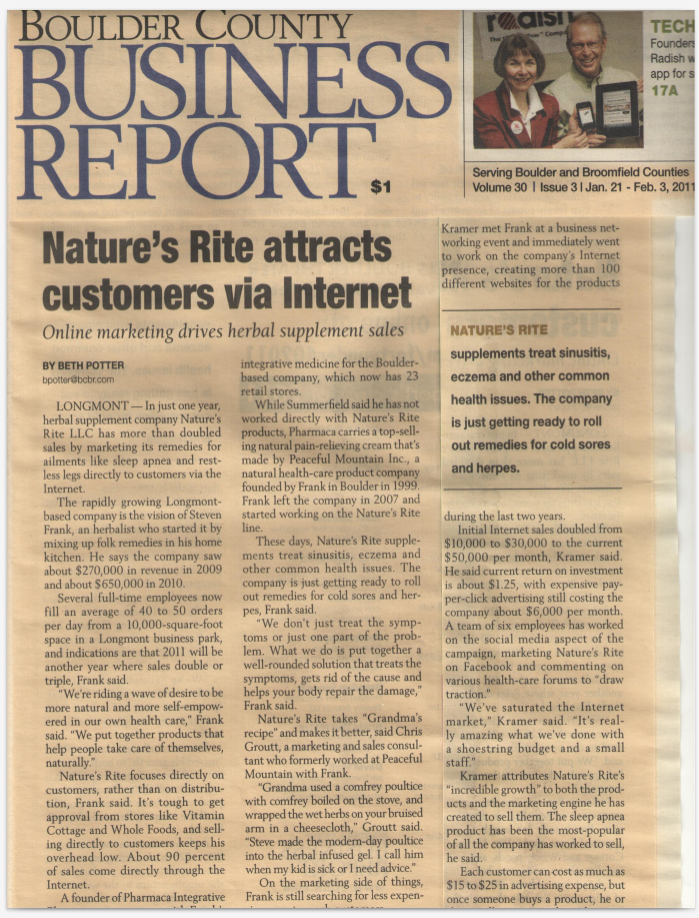
- Results: Increased Revenue from $270k - $650K in 1 year
- Engagement Dates: 2008 - 2011
- Industry: Online Retail - herbal wellness and ecommerce
- Location: Niwot, Colorado
- Team: Soloprenuer

References Policy
My work with clients is confidential by default. Most engagements involve sensitive operational details, financial context, internal team dynamics, and customer data. I do not disclose client information, internal documents, or private communications unless the client has explicitly authorized it.Any public examples on this website are shared only to the extent a client has approved. In some cases, clients have given permission for limited disclosure such as photos together, a short written quote, or select clips from recorded coaching sessions. When those assets appear, they reflect client consent for that specific use only and do not imply broader permission to share additional details.If you are considering hiring me and would like references, I can provide them when appropriate, subject to client availability and confidentiality constraints. In all cases, I will protect client privacy and honor any restrictions requested by the client.Executive Summary
The company had strong product potential but a fragile operating and growth foundation. The ecommerce website was built in Microsoft Publisher 97, search visibility was weak, and the business lacked an ecommerce and customer tracking system to run structured promotions or retention outreach. Execution depended heavily on the Founder, with limited staffing and minimal documented procedures for customer service and shipping.
I led a systems-first rebuild that connected acquisition, conversion, retention, and fulfillment. I replaced the legacy site with a modern ecommerce foundation so customer tracking, coupons, and reporting were possible. I then installed measurable growth channels including retention outreach and tracked paid search, while building operational capacity through hiring, training, and SOPs so volume could increase without breaking delivery.
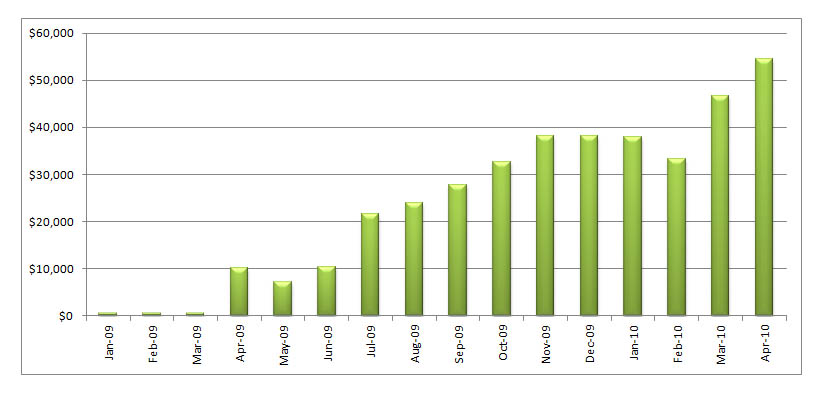
- Monthly online sales: $500 (January 2009) to $54,564 (April 2010)
- Orders per month: About 30 to about 700 within 6 months
- Site traffic: Over 5,000 visitors per month within 6 months
- Annual revenue: About $6K (2009) to $650,000 (2010)
- PPC unit economics: $6,000 per month spend; $15 to $25 customer acquisition cost with initial ROI of 1.25
Starting Point: What Was Breaking
- Legacy Publisher 97 website limited ecommerce capability, performance, and SEO presence.
- Weak search visibility from non-optimized URLs and limited content depth.
- No ecommerce tracking for customer history, promotions, or retention outreach.
- Limited staffing and limited documented procedures constrained service and shipping throughput.
- High dependence on Founder bandwidth for cross-department decisions and execution.
- New customer acquisition via PPC required careful pacing due to cash timing and advertising platform constraints.
Objectives for the Engagement
- Establish a scalable ecommerce foundation that supports tracking, offers, and reporting.
- Make growth measurable so acquisition decisions can be managed on ROI and conversion performance.
- Increase repeat purchasing through retention outreach that can be executed consistently.
- Scale delivery capacity with hiring, training, and SOPs to protect customer experience as volume grows.
- Reduce Founder bottlenecks by clarifying roles and delegating execution through documented workflows.
What I Changed: The Interventions
Operating Cadence and Accountability
- Defined roles and ownership across customer service, fulfillment, and support functions.
- Built training and SOP use so execution could be delegated without constant Founder intervention.
Financial Visibility and Decision Support
- Instrumented tracking and reporting so decisions could be made on ROI rather than opinion.
- Managed pacing of marketing ad spends to align spend with cash flow realities.
Sales Follow-Up and Pipeline Discipline
- Implemented newsletters and discount offers as a retention system to drive repeat purchasing.
- Structured customer outreach into a sustainable cadence the team could run consistently.
Process, Tools, and Delivery Systems
- Rebuilt the storefront in parallel to the legacy site to reduce cutover risk.
- Implemented an ecommerce cart that supports customer tracking, coupons, promotions, and reporting.
- Built measurable acquisition through tracked Google pay-per-click campaigns and reporting.
- Scaled throughput by hiring and training staff and creating SOPs for fulfillment, customer service, and marketing execution.
KPIs and Outcomes
| Metric | Before | After | Change | Timeframe/Date Notes |
|---|---|---|---|---|
| Monthly online sales | $500 | $54,564 | +10,812% | January 2009 to April 2010 |
| Orders per month | 30 | 700 | +2,233% | April 2010 |
| Site traffic | Not tracked | Over 5,000 visitors per month | N/A | April 2010 |
| Annual revenue | $6K | $650K | +10,733% | 2008 to 2010 |
| PPC unit economics | Not available | $6K monthly; $15 to $25 CAC; ROI 1.25 | N/A | February 2011 |
- Before
- $500
- After
- $54,564
- Change
- +10,812%
- Timeframe
- January 2009 to April 2010
- Before
- 30
- After
- 700
- Change
- +2,233%
- Timeframe
- April 2010
- Before
- Not tracked
- After
- Over 5,000 visitors per month
- Change
- N/A
- Timeframe
- April 2010
- Before
- $6K
- After
- $650K
- Change
- +10,733%
- Timeframe
- 2008 to 2010
- Before
- Not available
- After
- $6,000 monthly; $15 to $25 CAC; ROI 1.25
- Change
- N/A
- Timeframe
- February 2011
The results followed a deliberate sequence: fix infrastructure, then measure, then scale. Ecommerce tracking enabled retention outreach and ROI-based paid acquisition decisions. Hiring, training, and SOPs turned execution into repeatable workflows so increasing order volume did not increase Founder dependency.
Timeline of Key Moments
- 2008 to early 2009 – Baseline assessment and plan for a new website and measurable marketing; monthly online sales about $500.
- Q1 2009 – Replacement website and ecommerce foundations built in parallel to the existing site; customer tracking becomes possible.
- April 2009 – Early ramp of measurable campaigns and conversion improvements; monthly sales recorded at $10,231.
- July to September 2009 – SEO and content expansion and operational capacity scaling; monthly sales recorded at $21,540 to $27,689.
- October 2009 – Acquisition and retention programs operating in tandem; monthly sales recorded at $32,564.
- April 2010 – Matured marketing engine and scaled operations; monthly sales recorded at $54,564.
- January to February 2011 – 40 to 50 orders per day, about 90% of sales via internet with PPC and SEO marketing.
Why This Worked
Improved ecommerce foundation with strong SEO, PPC, and customer retention marketing created a single operating surface for tracking marketing efforts, making repeat customer offers, and an aggressive marketing to new customers.
Follow-through became measurable through tracking and reporting that supported ROI-driven decisions in paid customer acquisition and customer retention.
As growth accelerated, tribal knowledge was converted into SOPs and training. Hiring and role clarity increased throughput while reducing reliance on the Founder for daily execution.
Transferable Value
- Operational diagnostics and constraint identification for early-stage scale-ups.
- Ecommerce and tracking foundation for measurable growth.
- KPI and reporting discipline for ROI-based decision making.
- Retention outreach using newsletters and discount offers.
- Hiring, training, and SOP creation to scale fulfillment and customer service.
- Cross-functional alignment so growth does not outpace delivery capacity.